Online cinema ticket sales

Summary

This project is an improvement of the ticket purchase flow on Peixe Urbano. During the work I was guided by the other members of the team.

Responsibilities

- User Research
- IOS interface
- Prototype
- Usability tests

Duration

Jan 2020 - Mar 2020
The challenge
The sale of movie tickets is one of the pillars of Peixe Urbano's revenue. In the current system, the user buys the coupon on the website or app, retrieves the ticket and only chooses the movie at the cinema box office. It is a somewhat outdated system and there are already solutions from other companies that avoid problems and make the consumer's life easier. In order to improve the user's experience when buying from Peixe Urbano and increase sales conversion, we conducted a study to design the new flow.

Offer page for tickets, without movie or seat choice

Qualitative Research
First, qualitative research was conducted to identify the consumption habits related to cinema, especially in O2O (Online to Offline) e-commerce of potential users. The research focused on:
The research was conducted with 6 potential users. Due to the emergence of Covid-19, we opted to conduct the interviews online, through voice calls, to ensure the safety of all.
First Findings
User behavior when buying online:
Queues: To avoid queues, especially on big premieres.
Good seats: To ensure good seats, especially in large groups
Ticket: Currently the most used platform is ingresso.com
When asked if they buy online or at the cinema box office:
"Online, to avoid lines. It marks the place, it's faster and avoids running out of tickets." - Danilo, 27 years old.
There are also cases where the user usually buys online, but in certain situations they prefer to buy at the box office.
"I prefer a thousand times to buy online, but when I go with my friends sometimes it's a pain. That's why I buy at the box office even." - Tais, 23 years old.
Main points found:
Quantitative research
After obtaining the results of the first research, a questionnaire was developed to show the behavior of users on a larger scale. It was very useful to do the qualitative first because we were able to get some "insights" that could also be confirmed on a larger scale. The survey was launched through an email blast to our subscriber base. About 331 responses were obtained for each question.
Key findings about user behavior
44,4%
Are motivated by the movie on display
The movie is the main reason people go to the cinema. Low prices and the experience are also motivating factors.
78,9%
Go to the cinema more than once a month
Even with online movie and series streaming, the frequency of people going to the cinema is still relevant.
77,9%
Prefer to buy movie tickets online
Most people prefer to buy tickets online instead of at the box office.
94,9%
Have already bought a ticket online
Most people have experience buying online, having already bought at least once.
60,1%
Buy tickets in advance
To avoid missing the session due to overcrowding or to guarantee good seats.
35,1%
Usually buy something at the cinema store
Adding the cinema store online can prevent the user from having to queue to pay in person.
83,4%
Would feel more motivated if they had more discounts on tickets
The sales department can propose partnerships with cinema networks to provide more discounts to users.
67,5%
Would like to receive suggestions for films according to their taste
It could be a differential that allows user retention. We can gather data based on the user's actions.
Planning the Flow
Designing the Flow
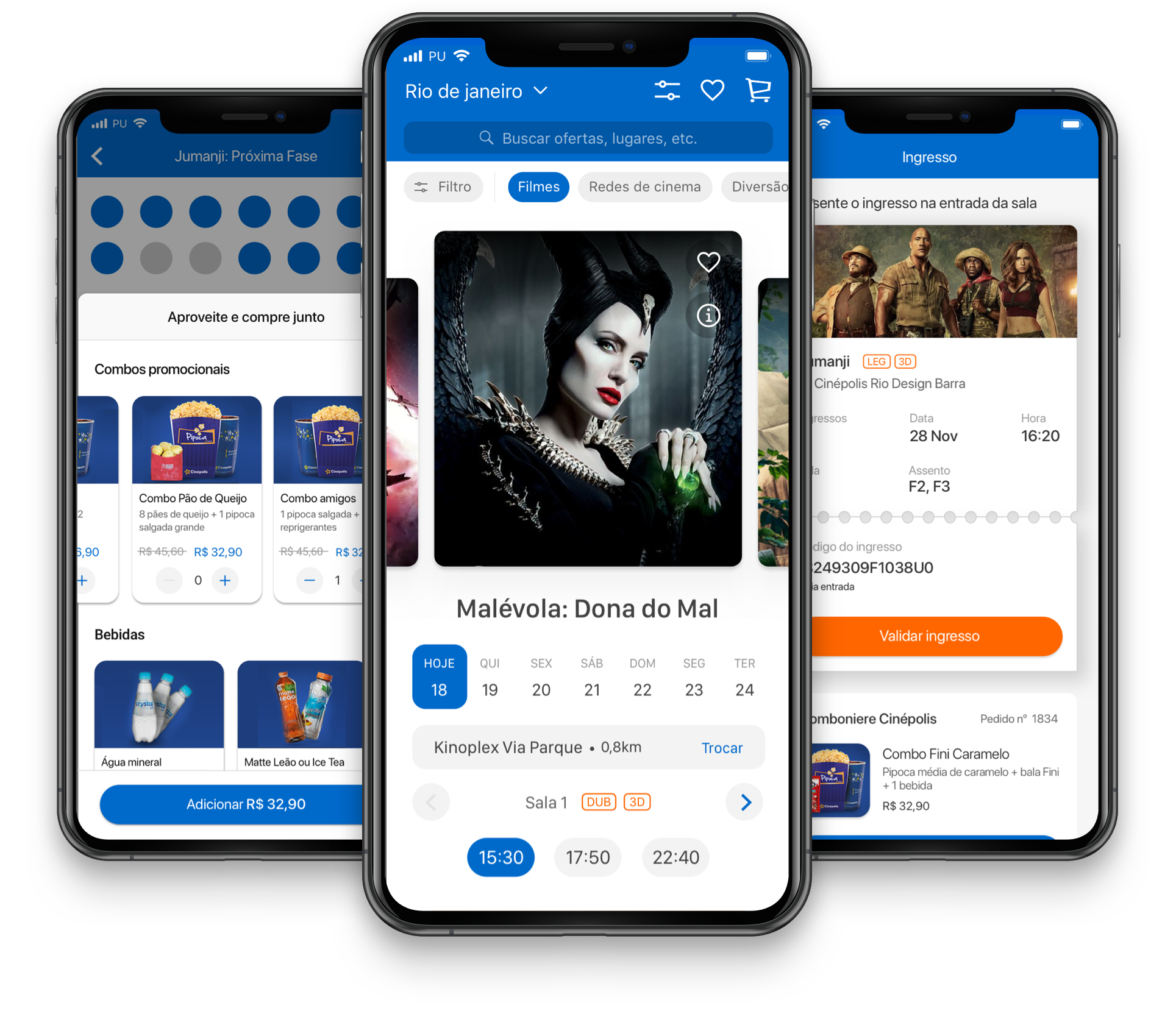
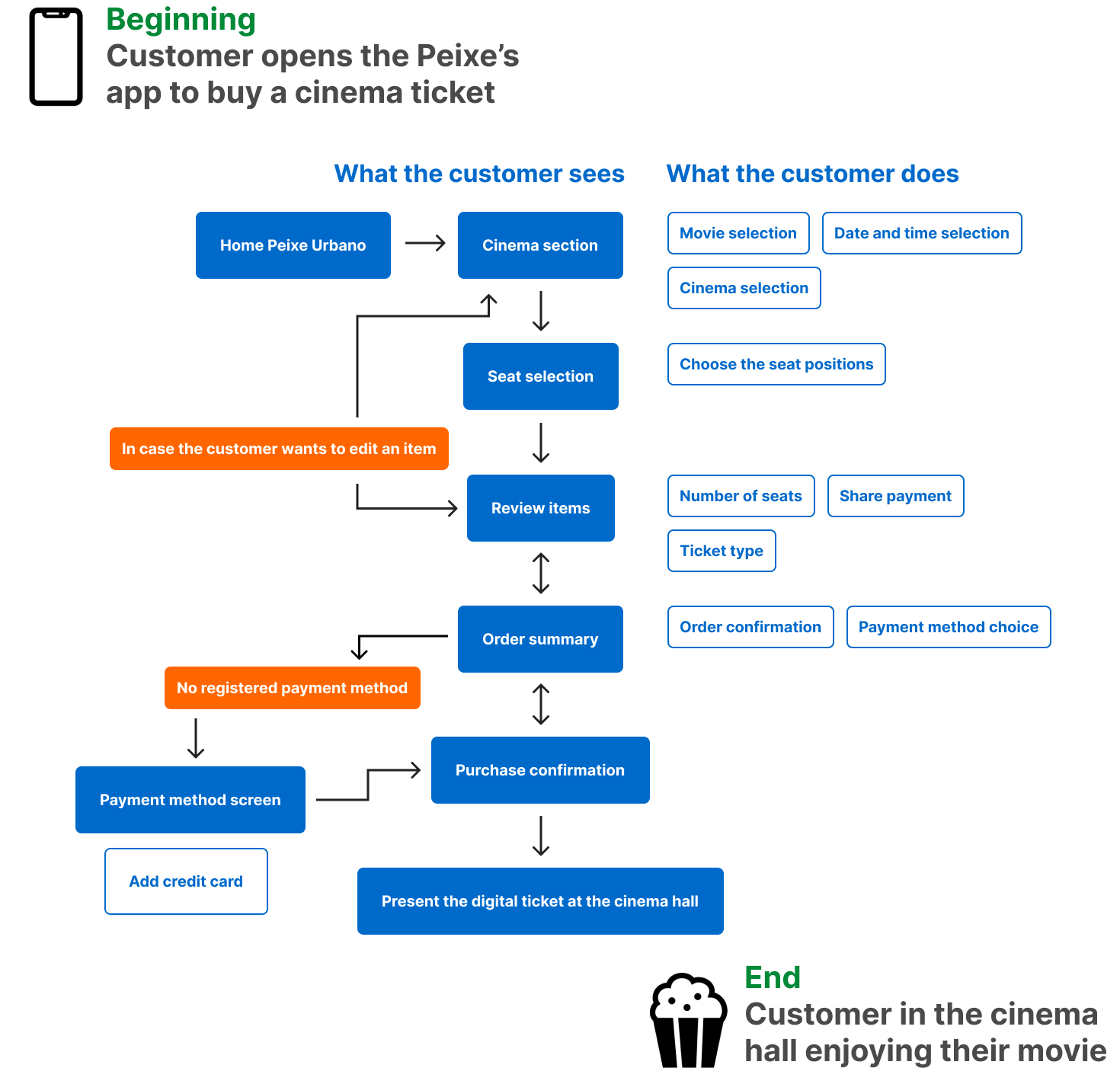
The research results showed points that can please the user and convert into more ticket sales. To turn these ideas into a flow within the app, we benchmarked other players that are already in the market. We also researched inspiration sites such as Dribbble, Behance, Mobbin, etc. Vanessa Fernandes created the base of the flow and the wireframes, while I took care of the "finalization" of the UI of the first version of the flow. For this first version, the following features were decided:
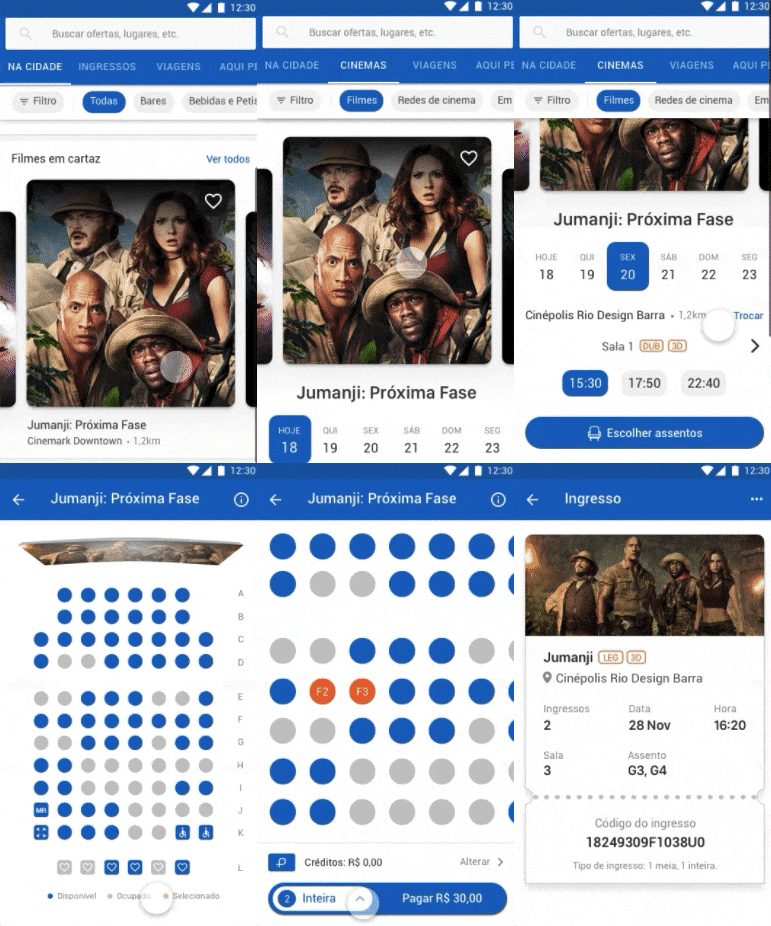
Simplified purchase flow
  • Carousel of films with suggestions for a nearby cinema session
  • Easy navigation at all levels: dates, rooms, and times
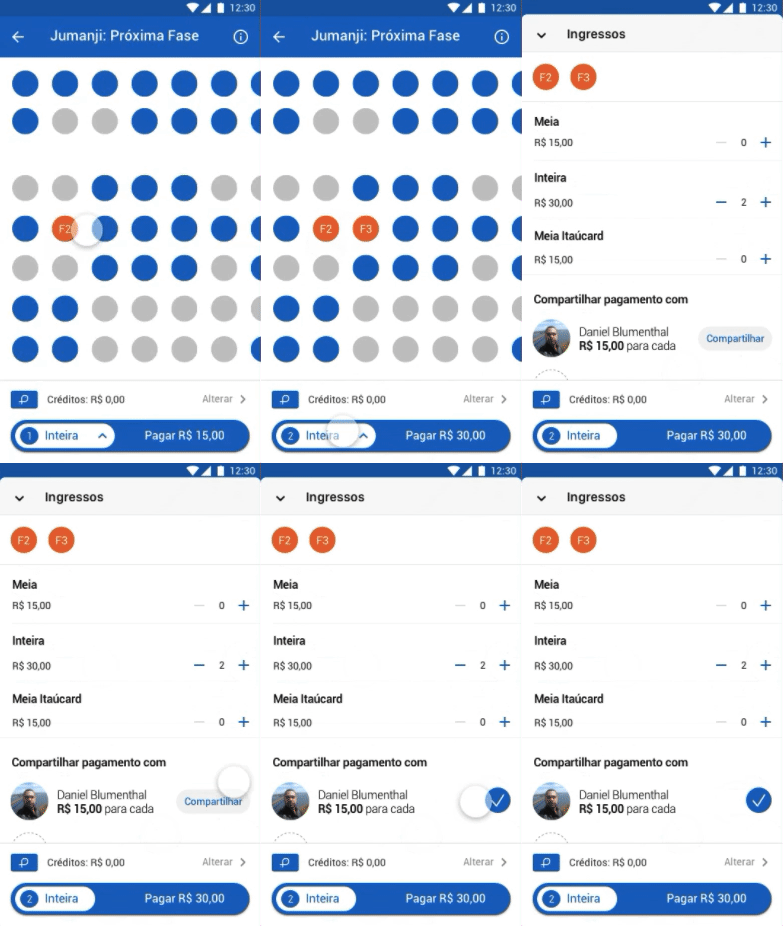
  • Seat marking
  • Quick payment
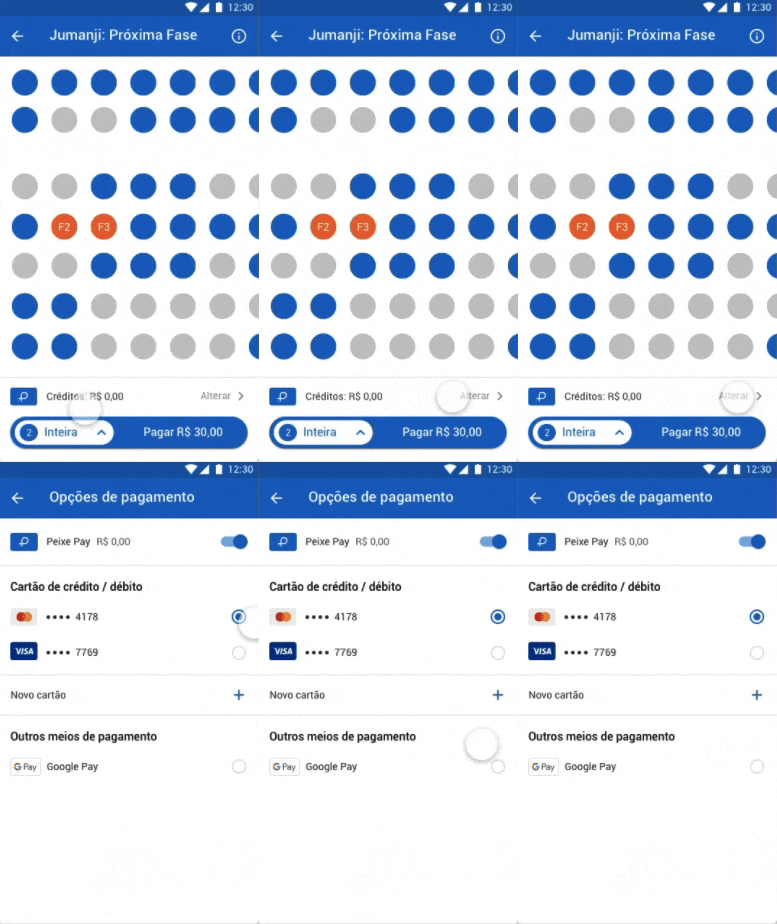
Payment options
  • Quick payment with easy access to payment options
  • Increased visibility of payment via Peixe Pay. By keeping it "on", the user first uses Peixe Pay balance and pays the rest with the chosen card.
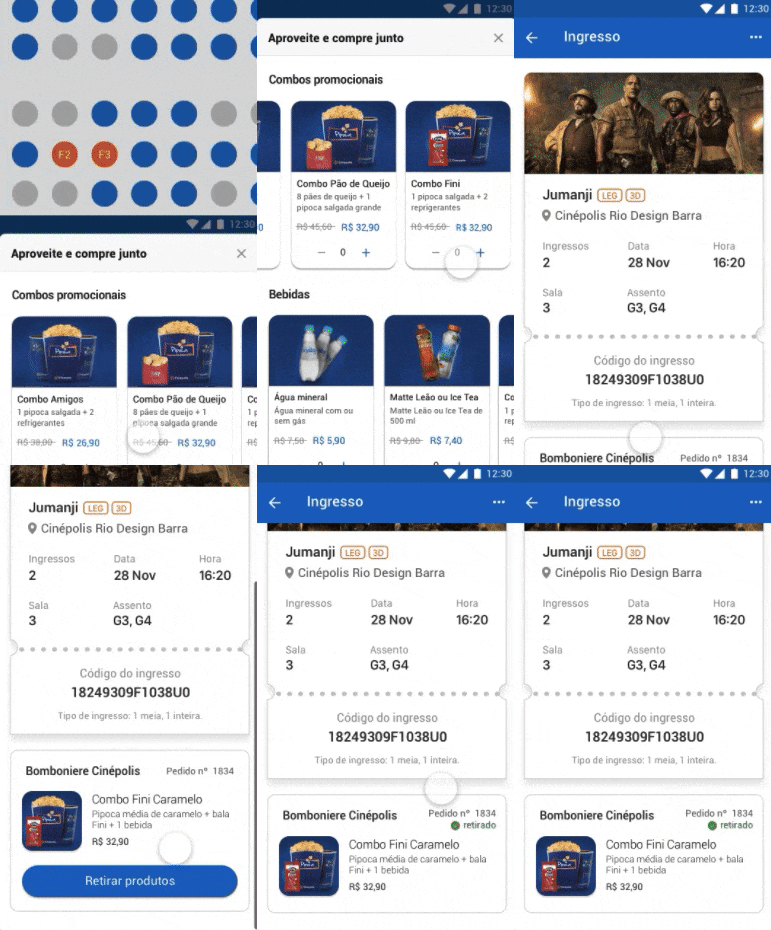
Offering Confectionery Products
  • Extra sales opportunity
  • Increased average ticket
  • Easy seat booking
  • Quick order pickup
Split Fare
  • Research showed that usually one person is responsible for buying tickets for couples or groups
  • Interviewed users replied that they would like the option to split payment through the app
User Testing
With the first version of the flow ready and with the navigable prototype we were able to start user testing. The goal of this test is to identify potential problems in the flow, mainly to evaluate the clarity of the carousel on the home page, evaluate the session selectors and cinema units.
About the test
The test was conducted online, through video call with screen sharing, where we were able to analyze the user's interaction with the navigable prototype. We had 5 volunteers, 3 men and 2 women. This amount was based on Jakob Nielsen's study, which shows that with 5 people it is possible to detect usability problems in a practical and quick way, and it is possible to repeat the test with 5 more people after making the modifications after the first test. We defined a scenario where the user puts themselves in a common situation of using the app and asked them to comment on what they were doing on each screen.
Conclusion and learnings
Due to Covid-19, the project was frozen, but the MVP was developed for when cinemas return to operation. When it is available to the public, the next steps will be to analyze the heat map with the largest audience to see how the user is behaving with the new function, and thus propose new improvements.

From the beginning of the project I was sure it would be a good challenge. The research done beforehand served to guide the project and brought a very cool and feasible result with what the public feels. I feel that I improved my teaching when conducting the interviews and applying the usability test. It was a big project in which I had to review each screen of the flow, since only after having the prototype ready could I really see how it would be possible to navigate through the screens. I also feel that my skills as a UI Designer have increased, as it was a process with a lot of corrections and changes.

I thank the UX team at Peixe Urbano for their support and teachings during the process.

Team: Raphael Gonçalves, Vanessa Fernandes, Fernando Meireles, Daniel Blumenthal and Douglas Ramos.